Manage Your Attention Budget as Your Scarcest Resource
You can hire more engineers, negotiate a bigger budget, or extend a deadline. Your capacity for sustained attention is harder to expand.
Every meeting, Slack thread, and “quick question” draws from the same budget. Individually, the requests seem reasonable. Together, they crowd out strategy, thoughtful 1:1s, and the systems that would make your team less dependent on you.
A full calendar does not tell you whether your attention went to useful work.
Give Your Attention a Budget
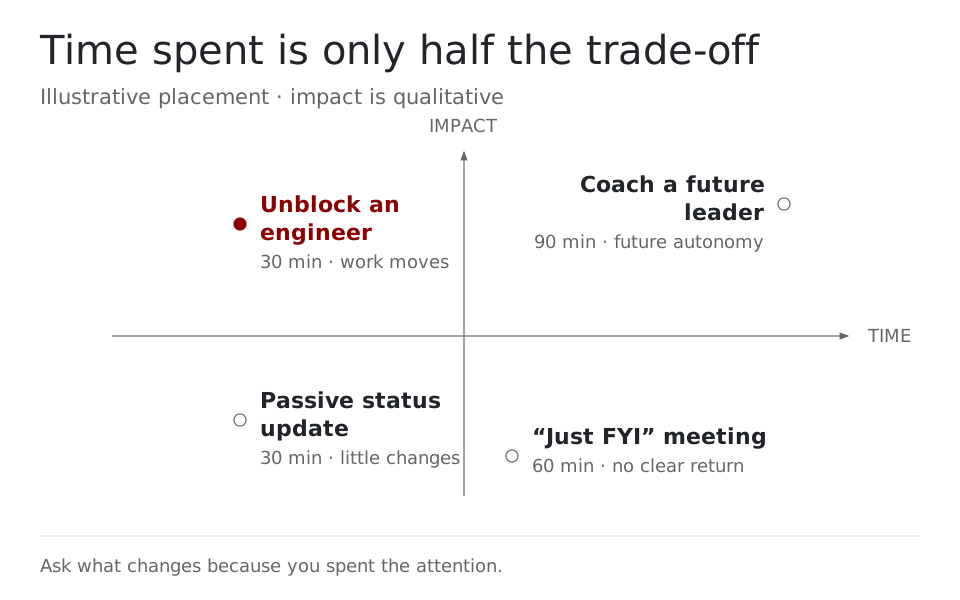
Track one week of work before changing your calendar. Sort commitments by what they accomplish, not what they’re called: a 1:1 focused on growth belongs in a different bucket from a routine status update.
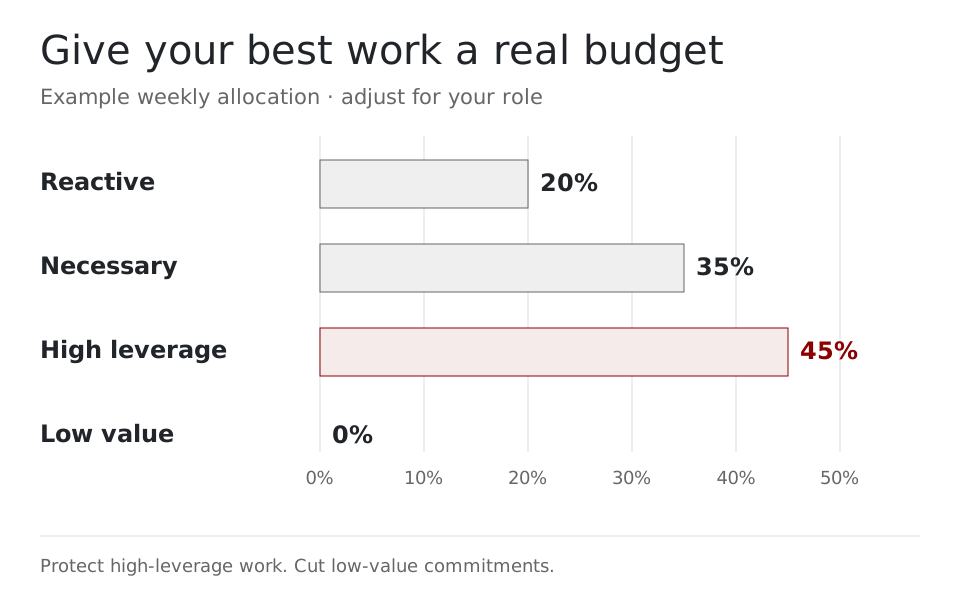
Use this allocation as a starting point, then adjust for your role and incident load. The point is to reserve attention for high-leverage work before reactive work consumes it.
Protect Focus and Batch Interruptions
Find the hours when you think most clearly. Reserve at least three recurring 90-minute focus windows each week, with Slack and email closed. Batch communication around those blocks.
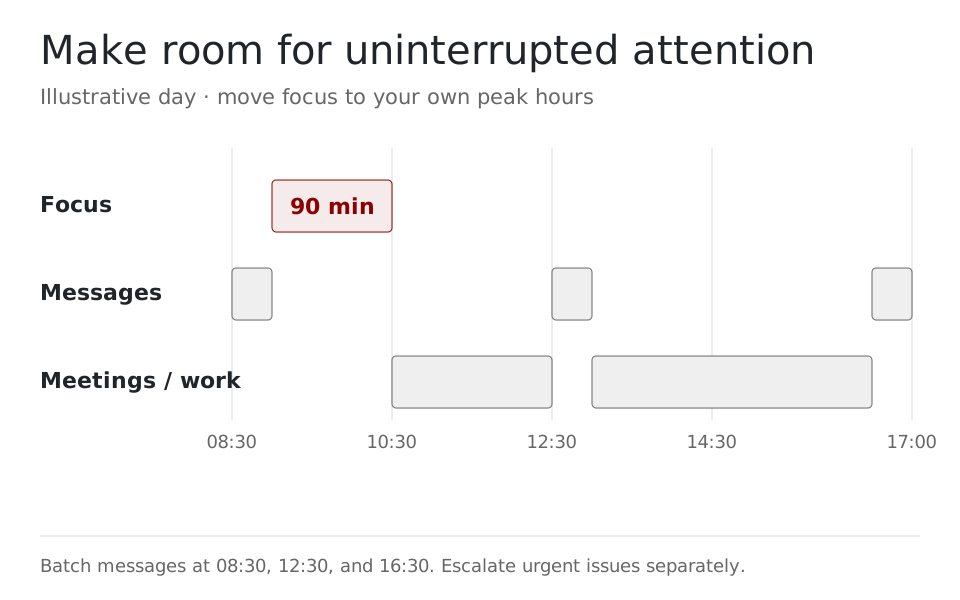
Tell your team when you check messages and how to reach you for urgent issues. A focus block needs a shared expectation about availability.
Make Meetings Earn Their Place
Run each recurring meeting through this filter. Start with three meetings this week.
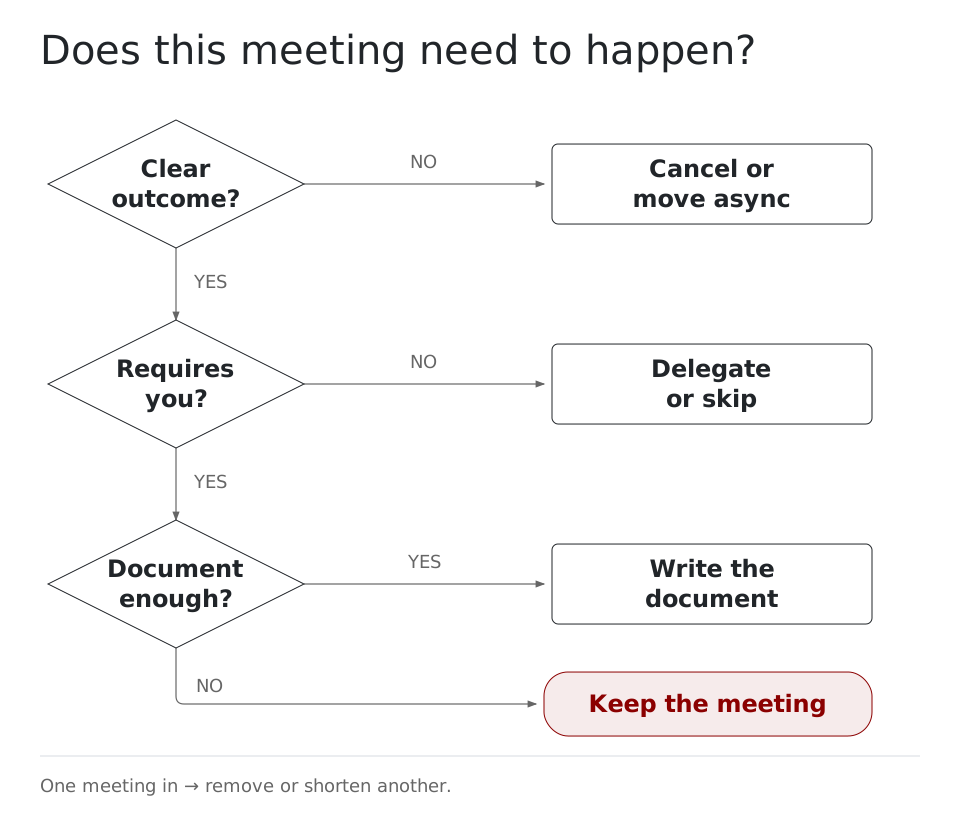
Group similar decisions, too. Use weekly planning for priorities, office hours for questions, and a regular architecture review for technical trade-offs. Give each a clear scope so it earns its place on the calendar.
Invest in Work That Gives Attention Back
Repeated questions and approvals are clues about where a system is missing. Instead of answering the same question faster, make the answer available or give someone the authority to decide.
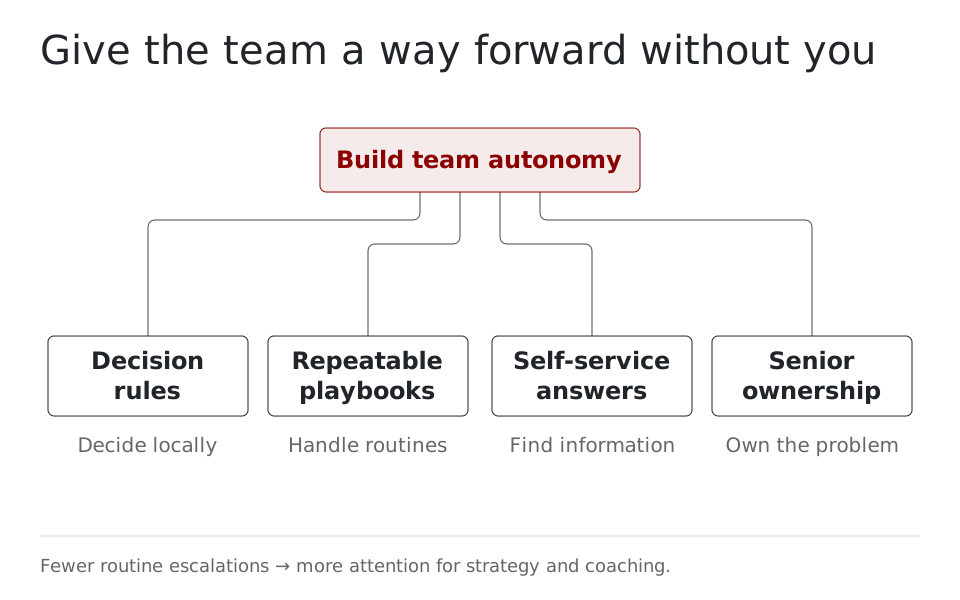
Ask What the Attention Buys
Before accepting a commitment, name the outcome it should produce. Time spent is only one side of the trade-off.
Watch for Attention Debt
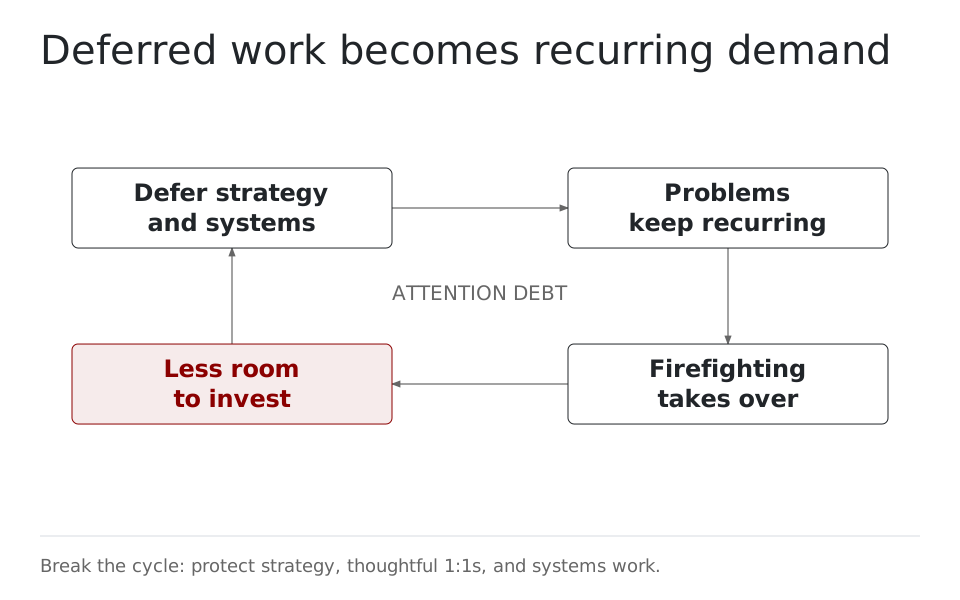
Postponing important work can create the interruptions that keep you from returning to it.
Start with Next Week’s Calendar
- Review last week’s commitments and sort them into the four attention buckets.
- Cancel, delegate, or move your biggest recurring attention leak async.
- Protect three 90-minute focus blocks during your best thinking hours.
- Share your communication schedule and urgent escalation route.
Review what changed after a few weeks. Look for decisions that got easier, ownership that moved to the team, and important work that finally had room on your calendar.